Welcome to My First Travel Blog
“Travelling – It leaves you speechless, then turns you into a storyteller.”
– IBN BATTUTA
Old World
The moment you set foot in the Walled City of Intramuros, the time seems come to a halt and everything slows down, it feels like you ride a time travel device and take you back to the Spanish Colonial Period in the Philippines.
Intramuros is the historic walled area within the modern city of Manila, the capital of the Philippines. It was build by the spaniards to be their political and military base in Asia. The Spanish began building Intramuros in 1521 on 0.67 square kilometres of land strategically chosen between Manila Bay and the Pasig River, it was designed as a tight grid to keep its streets functional but contained.
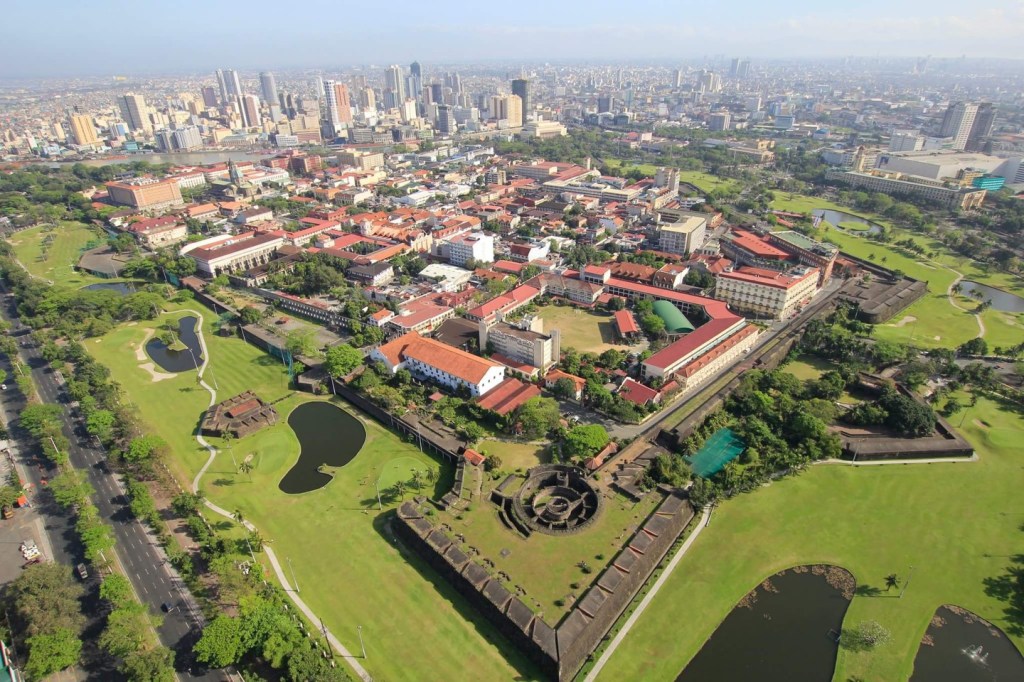
City Walls (Defense Structure)
The outline of the defensive wall of Intramuros is irregular in shape, following the contours of Manila Bay and the curvature of the Pasig River. The walls covered an area of 64 hectares (160 acres) of land, surrounded by 8 feet (2.4 m) thick stones and high walls that rise to 22 feet (6.7 m). The walls stretched to an estimated 3-5 kilometres in length. An inner moat (foso) surrounds the perimeter of the wall and an outer moat (contrafoso) surrounds the walls that face the city.
Several bulwarks (baluarte), ravelins (ravellin) and redoubts (reductos) are strategically located along the massive walls of Intramuros following the design of medieval fortifications. The seven bastions (clockwise, from Fort Santiago) are the Bastions of Tenerias, Aduana, San Gabriel, San Lorenzo, San Andres, San Diego and Plano. The bastions were constructed at different periods of time, the reason for the differences in style. The oldest bastion is the Bastion de San Diego which was built in 1587.
Inside Intramuros
The first time we— my closest friends— visited their, we had a chance to explore quite a bit of Manila, and I enjoyed walking around Intramuros.
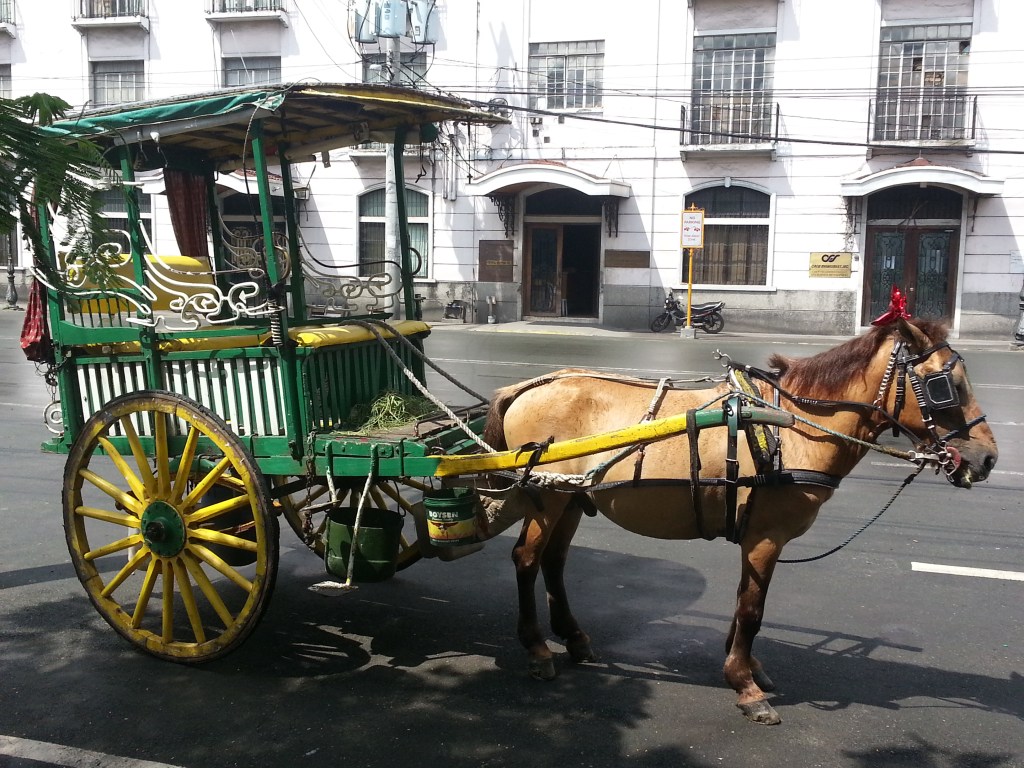
Going around Intramuros, we saw few horse-drawn wagon. Some of my friends decided to ride one of it, but I chose not to, I prefer going around the district walking so that I could take and browse photos.
Walking along the area, we saw families, group of friends and bunch of couples, who’s also enjoying their stay and seems astound on what they are seeing. Well, I can relate to them because everything in that place was just so eye catching and breathtaking that I fill contented with the thought of living in their.
Also, the folks in their are so nice and hospitable, we were toured by a lady and 3 gentlemen and assist us on everything. They all worn their pleasing smiles as they guide us on our journey inside the historical Walled City.
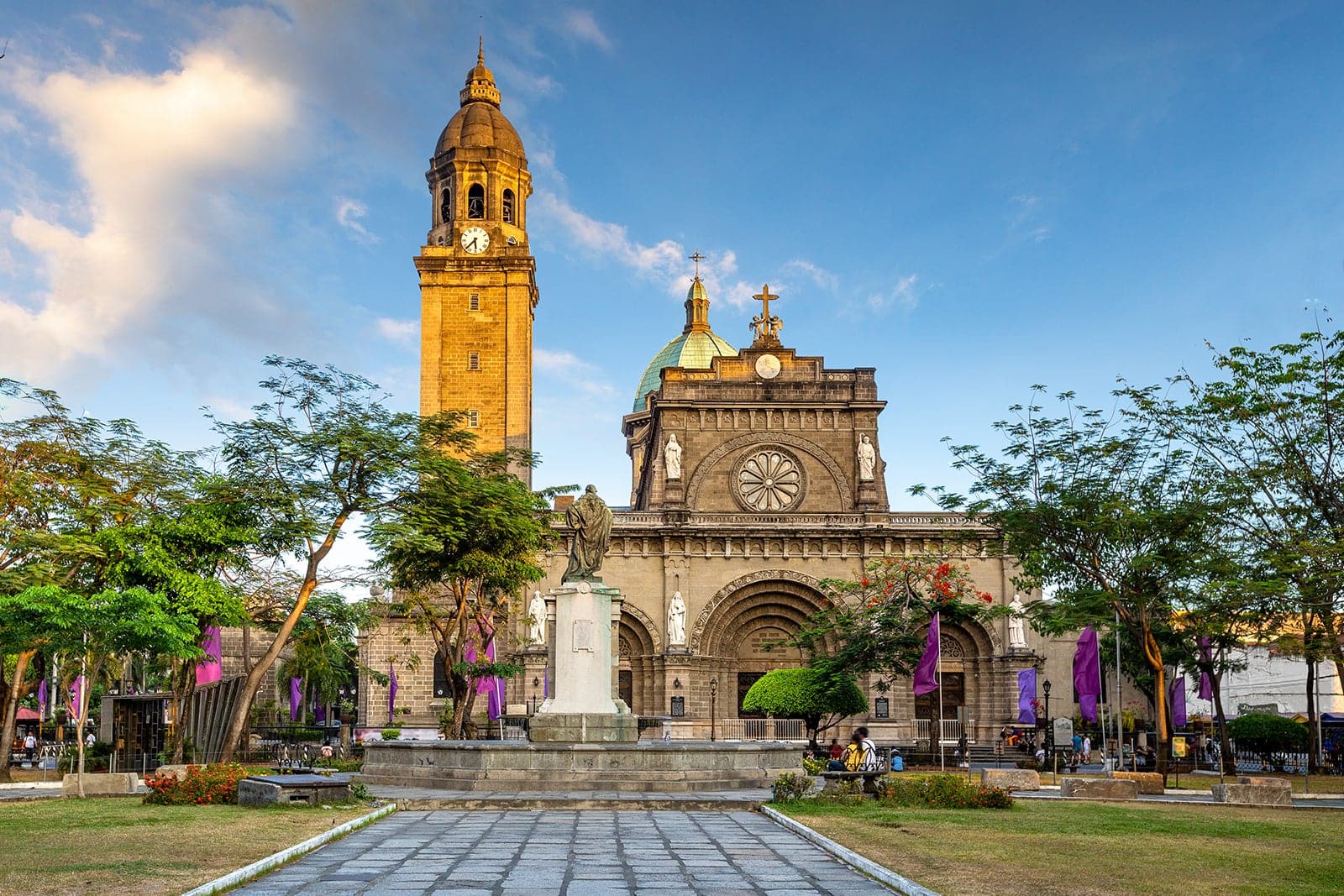
Manila Cathedral
The Minor Basilica and Metropolitan Cathedral of the Immaculate Conception also known as Manila Cathedral is the cathedral of Manila and basilica located in Intramuros, the historic walled city within today’s modern city of Manila, Philippines. It is dedicated to the Immaculate Conception, a title for the Blessed Virgin Mary, the principal patroness of the country. The cathedral serves as the episcopal see of the Archbishop of Manila.
The cathedral was damaged and destroyed several times since the original structure was built in 1581 while the eighth and current structure of the cathedral was completed in 1958.
It was still noontime when we get there so the light inside was off but the design structure of the church was still visible because of the sunlight piercing through the windows of it. There were a few people praying when we enter the hall, we chose to stay there at least 30 minutes, staring at the altar and moving our heads around to see the entire site inside. When we finished praying, I noticed that one of our friend was crying, we asked him why and he— yes, he’s a boy— said that it feels weird, at the same time amazing entering a church after a year of not doing so. He said that in the entire year of 2019, he didn’t get a chance to go to church so he took this opportunity to poor all the heavy loads that he’d been carrying and it was a big relief for him.
Also, after seeing the church, I dreamed of getting married in their, in the far future.
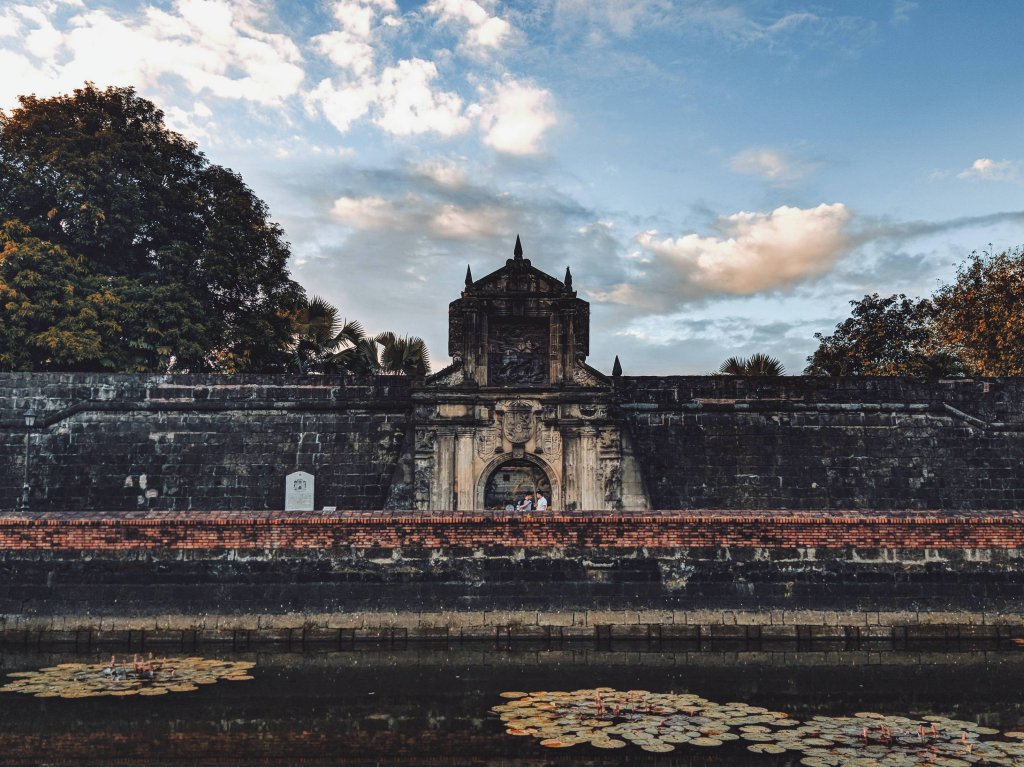
Fort Santiago
Fort Santiago (Spanish: Fuerte de Santiago; Filipino: Moóg ng Santiago), built in 1593, is a citadel built by Spanish navigator and governor Miguel López de Legazpi for the new established city of Manila in the Philippines. The defense fortress is located in Intramuros, the walled city of Manila.
The fort is one of the most important historical sites in Manila. Several lives were lost in its prisons during the Spanish Empire and World War II. José Rizal, one of the Philippine national heroes, was imprisoned here before his execution in 1896. The Rizal Shrine museum displays memorabilia of the hero in their collection and the fort features, embedded onto the ground in bronze, his footsteps representing his final walk from his cell to the location of the actual execution.
Inside Fort Santiago, you’ll enjoy a peaceful walk and chill in its gardens and lily pond. We also got a chance to see the dungeons where hundreds of civilian and guerrillas were imprisoned during the Japanese Occupation in World War II.
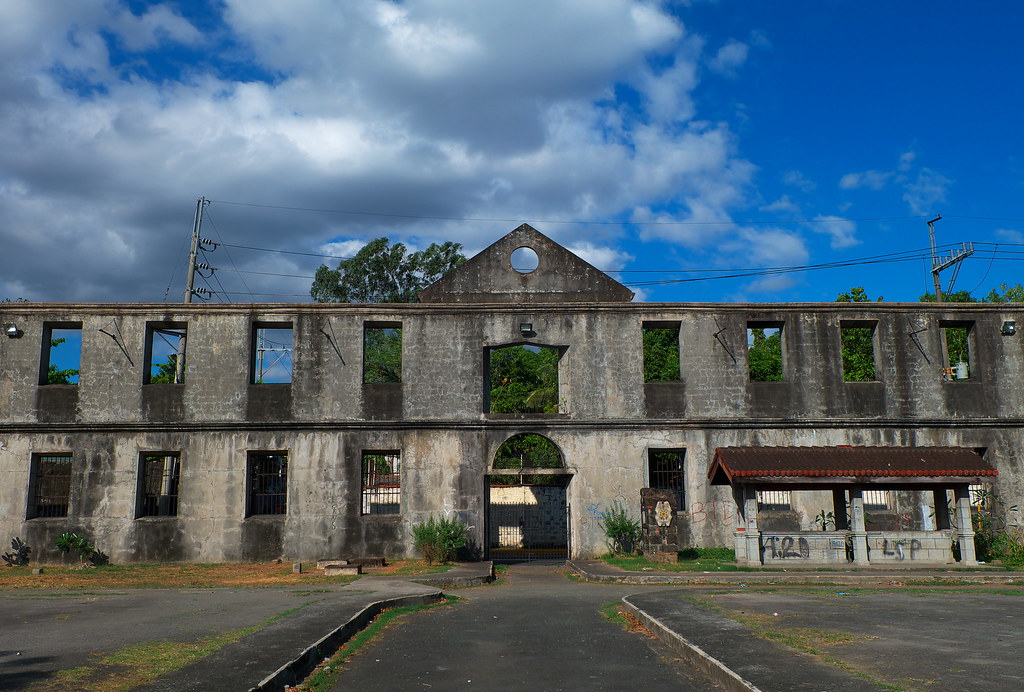
Cuartel de Santa Lucia
Cuartel de Santa Lucia is a ruined building in Intramuros, Manila, the Philippines.
It was constructed for the Artillería de Montaña in 1781 following the plans of Tomas Sanz. Its construction was executed during the governorship of José Basco y Vargas. In 1901, the Philippine Constabulary used the buildings as its headquarters. In 1905, it was opened as a military school, or the Philippine Military Academy in Baguio at present. The building turned into ruins during World War II, thus, the remaining walls were reconstructed by the Philippine Constabulary. The interior was never rebuilt and is being converted into a park.
The first thing that I have noticed in this place are the children and teens playing and having a bonding inside. The fresh air ripples ripples through my clothes, it was a place to go if you have to think or if you need to rest your mind for a while. We stay there, talking about nonsense stuffs and laughed so loud at the lame jokes of each other.
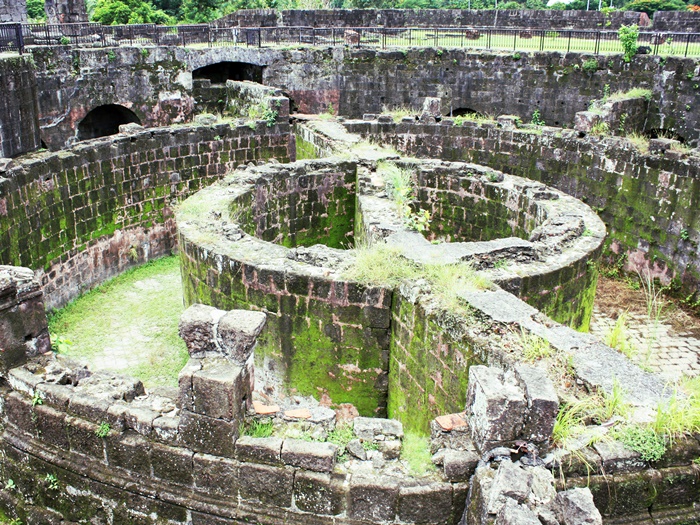
Baluarte de San Diego
The Baluarte de San Diego is a bastion in Intramuros, part of the Spanish colonial fortification in the walled city of Manila in the Philippines. It’s a famous bastion in Intramuros, constructed as part of the fortifications and designed to repel invasion.
Baluarte de San Diego was an ace-of-spades bastion built on the southwestern corner of Intramuros. It underwent several alterations. In 1609, a writing from Antonio de Morga states that the structure was only a tower within a much larger construction of the Fort Nuestra Señora de Guia. Jesuit priest Antonio Sedeño was the commissioned parish priest responsible for the construction of the Fort Nuestra Señora de Guia. However, the construction of the fort was always interrupted due to arising circumstances, thus, was not finished.
Aside from the bastion itself, you’ll also see the beautiful gardens, fountains, and the original cannons with details on when and where they are made. This is also a popular place for weddings and special occasions.
The photos below are the only complete picture we’ve got, unfortunately none of those are captured well.




The whole journey was wonderful, we didn’t mind the tiredness, the scenery were taking it all away, the folks are so nice and everything was just so beautiful. But as soon as I got home, I was drowned with tiredness yet I was smiling, ear to ear, the whole tour makes me feel euphoria.
“There is a whole world out there. Pack your backpack, your best friends and go”
– Unknown
 Within The Walls